

On January 29, 2026, APEX, in partnership with the Pittsburgh Technology Council (PTC), hosted the EDGE Defense Summit in Pittsburgh—bringing together representatives from the Department of the Air Force (DAF), industry, and academia for an afternoon focused on collaboration, innovation, and technology transition.
The event was designed to go beyond traditional information sharing—creating space for meaningful engagement, relationship-building, and actionable pathways for innovators working in robotics, AI, autonomy, and other emerging technologies.
Connecting Regional Innovation to National Security Priorities
The EDGE Defense Summit highlighted the growing importance of regional innovation ecosystems in supporting national defense. Pittsburgh, in particular, continues to emerge as a hub for robotics, artificial intelligence, and advanced manufacturing.
Opening remarks from the Pittsburgh Technology Council underscored the region’s rapid growth in defense-related business, reflecting increasing alignment between commercial innovation and national security needs.
Through this convening, APEX reinforced its role as a connector—bringing together stakeholders across government, industry, and academia to accelerate the transition of technology from concept to operational capability.
Insights from AFRL and AFWERX
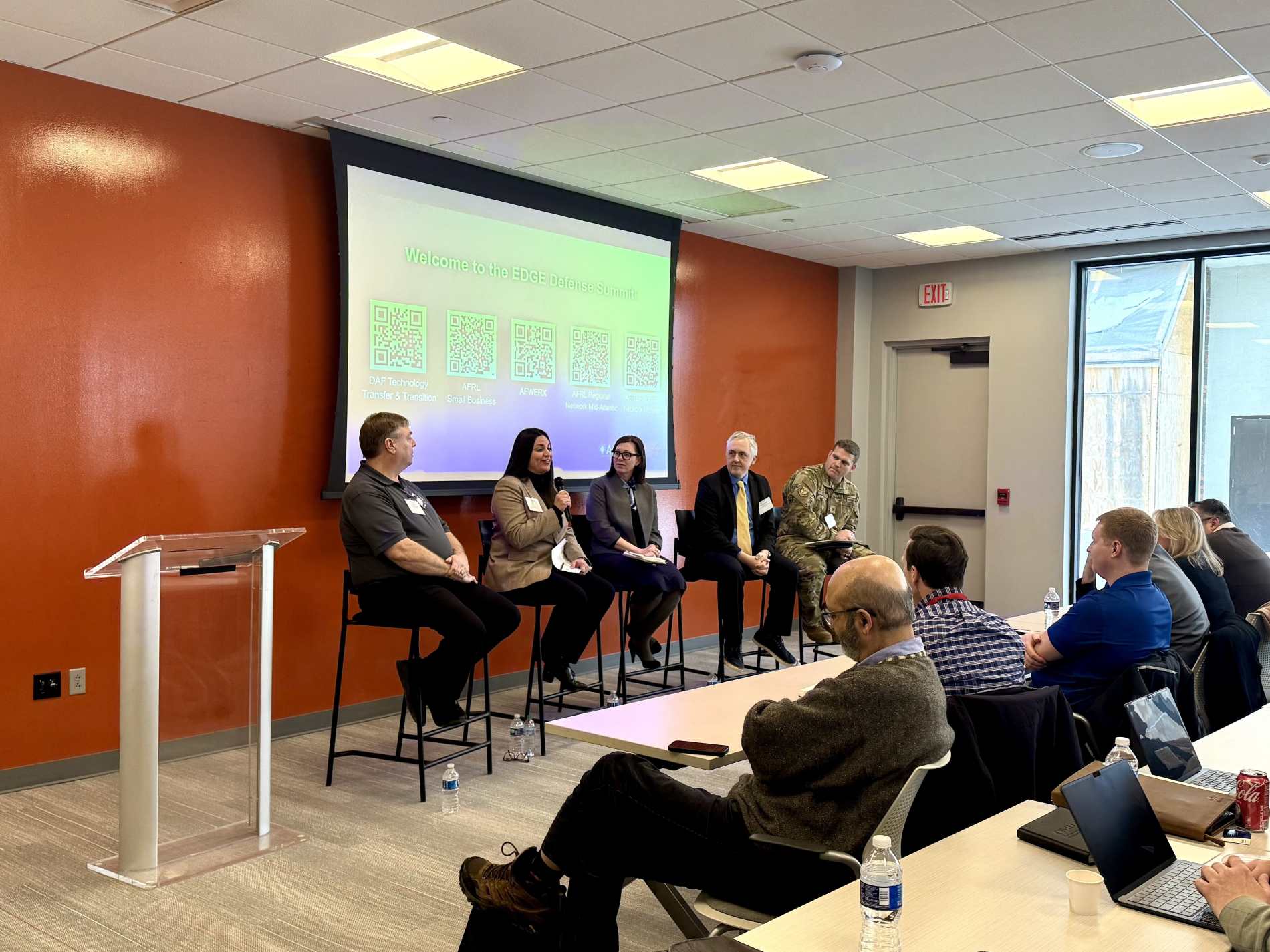
The event featured a panel discussion with representatives from AFRL, AFWERX, and operational units:
- Scott Aughenbaugh, Director, DAF Technology Transfer & Transition (T3) Office
- Shanel Fultz, Deputy Director, AFRL Small Business Office
- Allen Franke, Program Manager, AFWERX
- Col. Jason Figley, Maintenance Group Commander, 171st Air Refueling Wing
Moderated by Faith Chamberlain of Parallax Advanced Research, the discussion focused on several critical themes shaping today’s defense innovation landscape.
Accelerating Technology Transition Through Acquisition Reform
Panelists emphasized ongoing efforts to streamline acquisition and improve access points for industry and academia. Updates such as new contract vehicles and enterprise-wide initiatives are aimed at reducing fragmentation and enabling faster transition of critical technologies.
For innovators, this signals a continued shift toward speed, accessibility, and alignment with mission priorities.
The Role of APEX and Partnership Intermediaries
A key theme throughout the discussion was the importance of partnership intermediaries like APEX in bridging gaps across the innovation ecosystem.
From navigating Cooperative Research and Development Agreements (CRADAs) to supporting engagement through non-traditional pathways, APEX helps reduce barriers and create clearer on-ramps for collaboration with the DAF. As acquisition pathways evolve, intermediaries play an increasingly critical role in helping innovators navigate complexity without slowing momentum.
These mechanisms are often critical first steps in moving technologies from early-stage development toward operational use.
SBIR/STTR and the Evolving Funding Landscape
AFWERX and AFRL representatives also addressed the current SBIR/STTR environment, highlighting the importance of preparedness and alignment with priority technology areas.
Even as funding timelines evolve, the emphasis remains on transitioning viable, mission-aligned solutions—particularly those that demonstrate dual-use potential and scalability. Programs such as STRATFI and TACFI continue to play a key role in advancing technologies beyond the prototype phase when supported by strong customer alignment.
Warfighter Perspective: Collaboration that Drives Readiness
From an operational standpoint, Col. Figley emphasized the value of direct engagement between innovators and end users.
Partnerships with small businesses, universities, and industry not only support mission readiness but also strengthen workforce development and long-term capability within the defense ecosystem. This perspective reinforced a core message of the summit: innovation is most effective when it is informed by real-world operational needs.
From Conversation to Connection: Enabling Direct Engagement
One of the most impactful elements of the EDGE Defense Summit was the opportunity for industry to engage directly with AFRL.
Attendees participated in discussions and networking sessions that enabled meaningful connections with DAF representatives, providing insight into mission needs, alignment strategies, and potential pathways for collaboration. These interactions are often the starting point for future partnerships—helping innovators better understand how to position their technologies and engage effectively within the defense ecosystem.
APEX’s Role in Advancing Innovation
The EDGE Defense Summit exemplifies APEX’s mission in action—serving as a bridge between innovation and impact.
By convening stakeholders, facilitating dialogue, and creating opportunities for engagement, APEX continues to:
- Expand access to the defense innovation ecosystem
- Reduce barriers to entry for small businesses and academic teams
- Accelerate the transition of technologies aligned with DAF priorities
- Strengthen collaboration across government, industry, and academia
As regional ecosystems like Pittsburgh continue to grow, APEX remains committed to ensuring innovators have the pathways, connections, and support needed to contribute to national security.
Get Involved with APEX
Whether you are a small business, academic researcher, or industry partner, APEX provides no-cost support to help you navigate the SBIR/STTR process and connect with Department of the Air and Space Force opportunities.
Learn more and get started: https://apex-innovates.org/services/sbirsttr-process-navigation/